Skip to content
Home » How AI is Different from Human Beings
How AI is Different from Human Beings
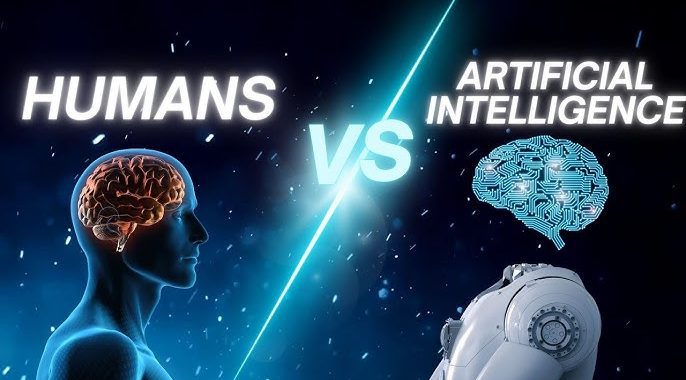
In the 21st century, Artificial Intelligence (AI) has become one of the most transformative innovations, reshaping industries, education, healthcare, and even personal lifestyles. From self-driving cars to voice assistants like Siri and Alexa, AI is now a daily part of human interaction. While AI is often designed to mimic human intelligence and decision-making, it is fundamentally different from human beings in many ways. To truly understand these differences, it’s important to explore the contrasts in learning, creativity, emotions, adaptability, and decision-making between AI and humans.
1. Learning Ability
One of the most striking differences between AI and human beings lies in how they learn. AI learns through data, algorithms, and programming. Machine learning models are fed with massive amounts of structured and unstructured data, and they use this information to identify patterns, make predictions, and perform tasks. For example, a facial recognition system can be trained to recognize thousands of faces by analyzing millions of images.
Humans, on the other hand, learn through experience, observation, reasoning, and intuition. Unlike AI, humans don’t require thousands of repetitive examples to learn something new. A child, for instance, can learn to recognize a dog after just a few interactions, using a combination of senses, memory, and logic. This natural ability to learn from limited data and generalize knowledge to new situations makes human learning far more flexible and adaptive than AI-driven learning.
2. Creativity and Innovation
Continue reading→