In today’s digital age, businesses are constantly exploring new and innovative ways to reach customers, drive sales, and boost brand awareness. One of the most popular and effective strategies that has emerged over the last decade is affiliate marketing. It has not only become a game-changing tool for companies but has also opened the door for individuals to earn a steady income online. Whether you are a blogger, influencer, or simply someone interested in making money from home, affiliate marketing can be an excellent opportunity to explore.
In this blog, we’ll cover everything you need to know about affiliate marketing—what it is, how it works, its benefits, challenges, and how you can get started.
What is Affiliate Marketing?
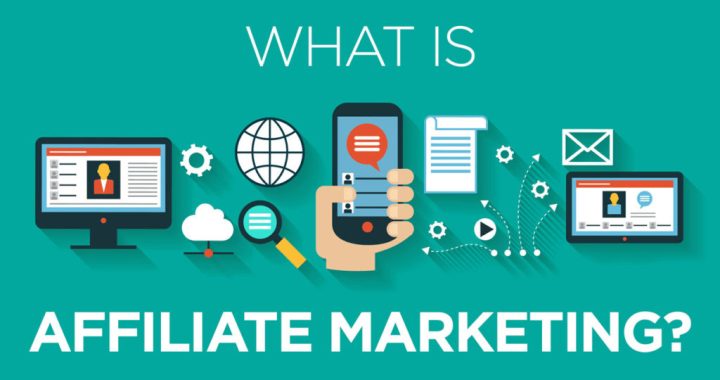
Affiliate marketing is a type of performance-based marketing strategy where businesses reward affiliates (partners) for driving traffic, leads, or sales to their products or services. Simply put, affiliates promote a company’s product on their platforms—like blogs, websites, YouTube channels, or social media accounts—and earn a commission whenever a sale or action is completed through their unique referral link.
Think of it as a modern version of earning a commission in sales. Instead of selling door-to-door or in a store, affiliates promote products online. When customers buy through their recommendation, they get paid.
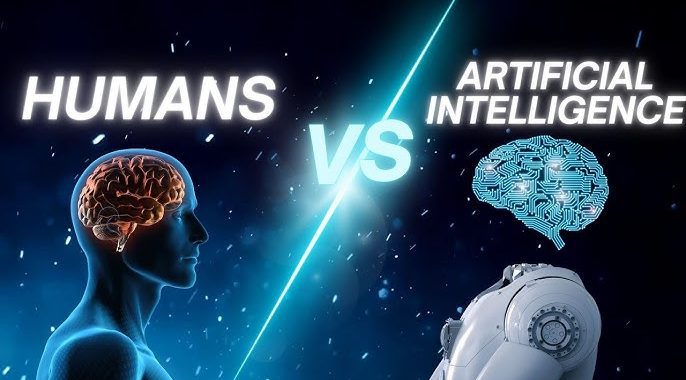
In the 21st century, Artificial Intelligence (AI) has become one of the most transformative innovations, reshaping industries, education, healthcare, and even personal lifestyles. From self-driving cars to voice assistants like Siri and Alexa, AI is now a daily part of human interaction. While AI is often designed to mimic human intelligence and decision-making, it is fundamentally different from human beings in many ways. To truly understand these differences, it’s important to explore the contrasts in learning, creativity, emotions, adaptability, and decision-making between AI and humans.
1. Learning Ability
One of the most striking differences between AI and human beings lies in how they learn. AI learns through data, algorithms, and programming. Machine learning models are fed with massive amounts of structured and unstructured data, and they use this information to identify patterns, make predictions, and perform tasks. For example, a facial recognition system can be trained to recognize thousands of faces by analyzing millions of images.
Humans, on the other hand, learn through experience, observation, reasoning, and intuition. Unlike AI, humans don’t require thousands of repetitive examples to learn something new. A child, for instance, can learn to recognize a dog after just a few interactions, using a combination of senses, memory, and logic. This natural ability to learn from limited data and generalize knowledge to new situations makes human learning far more flexible and adaptive than AI-driven learning.
When AI Started in India: A Journey from Early Research to Modern Transformation
Artificial Intelligence (AI) is no longer just a buzzword; it has become the backbone of technological progress across industries. From chatbots and recommendation engines to advanced healthcare systems and self-driving cars, AI is shaping how the world works. But one question often arises—when did AI actually start in India? Understanding the roots of AI in India helps us appreciate the milestones achieved so far and the direction the nation is headed.
India’s journey with AI is unique. Unlike the West, where AI research began in the 1950s and 60s, India joined the AI wave a little later. However, once the seeds of AI were planted, they grew rapidly, driven by research institutions, government initiatives, and the booming IT sector. Let’s explore this fascinating journey of AI in India—its beginning, growth, and present-day scenario.
The Early Stages: AI Research in the 1980s
AI as a concept started gaining attention globally in the mid-20th century. However, India formally entered the AI research landscape in the 1980s. During this time, Indian institutions started experimenting with machine learning, natural language processing, and basic robotics.
The Future of Artificial Intelligence : brimming with Opportunities and Challenges What Lies Ahead
Artificial Intelligence (AI) has shifted from being just a futuristic concept in science fiction to becoming an everyday reality in our lives. From the voice assistants on our smartphones to recommendation engines on streaming platforms, AI already plays a significant role in shaping how we live, work, and interact. Yet, what we are experiencing now is only the tip of the iceberg. The future of AI promises breakthroughs that could revolutionize industries, economies, and even the way humans perceive intelligence itself. In this blog, we will explore the possibilities, challenges, and outlook for AI in the years to come.
1. The Growing Role of AI in Everyday Life
AI is steadily embedding itself into our daily routines. In the future, we can expect this integration to become even deeper. Smart homes will evolve from simply controlling lights and thermostats to becoming fully intelligent environments that anticipate our needs, improve energy efficiency, and enhance security. Healthcare apps powered by AI could monitor vital signs in real-time, detect illnesses before symptoms appear, and recommend lifestyle changes tailored to individuals.
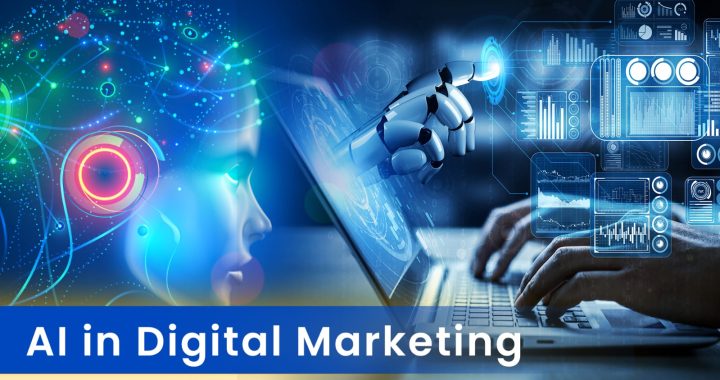
Digital marketing has transformed rapidly in the last decade, and Artificial Intelligence (AI) is at the heart of this revolution. From personalized recommendations on e-commerce sites to smart chatbots that respond instantly to customer queries, AI has become an indispensable tool for marketers. Businesses today can no longer rely solely on traditional methods; they need to embrace AI-powered strategies to stay competitive, enhance customer experiences, and optimize their marketing efforts. In this blog, we’ll explore how to use AI in digital marketing, its benefits, and practical applications that businesses can implement.
Why AI Matters in Digital Marketing
AI enables marketers to analyze vast amounts of data, predict consumer behavior, and create personalized campaigns at a scale that humans alone cannot achieve. Unlike conventional marketing tools, AI continuously learns and improves, making campaigns more efficient over time. Whether it’s understanding customer journeys, segmenting audiences, or automating repetitive tasks, AI makes digital marketing smarter, faster, and more impactful.
Key Ways to Use AI in Digital Marketing 1. Personalization and Customer Experience
Artificial Intelligence (AI) has become one of the most revolutionary technologies of the 21st century. From virtual assistants like Siri and Alexa to advanced applications in healthcare, finance, marketing, and robotics, AI is shaping industries and creating countless career opportunities. With this rapid demand, professionals and students alike are asking:
Which type of AI course is best?
Choosing the right AI course can feel overwhelming because there are so many options available today—ranging from short online tutorials to full-fledged university degrees. The ideal course for you depends on your career goals, your current level of expertise, and the industry you want to work in. Let’s dive into the different types of AI courses and explore which might be the best fit for you.
In today’s digital world, businesses cannot rely only on traditional marketing. People are constantly searching online for products, services, and solutions, and appearing in front of the right audience at the right time has become essential. It is one of the most effective online advertising platforms that allows businesses to show their ads to potential customers exactly when they are searching. But how does Google Ads really work? Let’s explore this step by step.
What is Google Ads?
It allows advertisers to display ads on Google’s search engine results pages (SERPs), YouTube, Google Maps, Gmail, and other partner websites within the Google Display Network.
The platform works on a pay-per-click (PPC) model meaning you only pay when someone clicks on your ad. This makes it cost-effective because your budget is spent only when users engage with your ads.
Artificial Intelligence: Shaping the Future of Technology
In today’s fast-paced digital era, the term Artificial Intelligence (AI) has become one of the most discussed topics across industries, academic circles, and even in everyday conversations. From voice assistants like Siri and Alexa to advanced self-driving cars, AI has already started influencing our daily lives in ways we may not always notice. But what exactly is AI, why is it important, and how is it shaping the future? Let’s dive deeper into this transformative technology.
What is Artificial Intelligence?
Artificial Intelligence refers to the ability of machines or computer systems to simulate or replicate human-like intelligence. These machines are programmed to think, learn, and make decisions, often performing tasks that would normally require human reasoning. AI works by analyzing large volumes of data, identifying patterns, and making predictions or decisions based on that data.
AI can range from simple applications, such as spam filters in email, to more complex systems, like natural language processing (used in chatbots) and image recognition. At its core, AI combines various disciplines, including computer science, data analysis, mathematics, linguistics, and neuroscience.
In today’s digital-first world, social media is no longer just a platform for connecting with friends or sharing life updates. It has evolved into one of the most powerful tools for businesses and brands to reach engage and build relationships with their audiences. With billions of active users across platforms like Facebook, Instagram, LinkedIn, Twitter (X), and YouTube, social media has transformed the way businesses market their products and services.
Let’s explore in detail why social media marketing is important and how it can make a difference for businesses of all sizes.
1. Massive Audience Reach
The most obvious reason why social media marketing is important is its ability to connect businesses with a massive audience. That’s more than half of the global population Whether you run a small local store or a multinational company, your target customers are already on social media.
Platforms like Facebook and Instagram allow businesses to reach audiences based on age, location, interests, and behaviors. This means you are not just reaching a large audience, but also the right audience. Unlike traditional advertising methods, social media lets you target people who are genuinely interested in your products or services, increasing the chances of conversion.