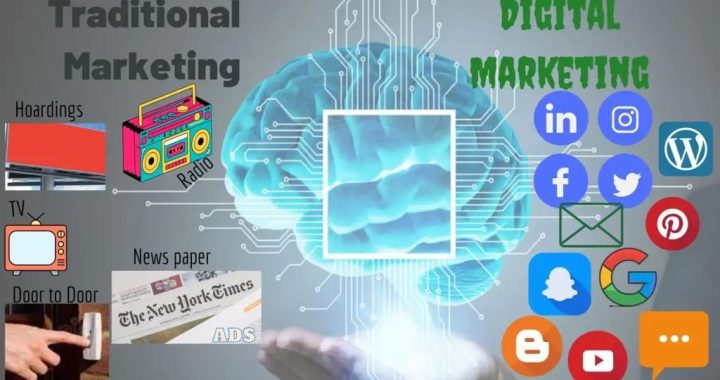
How Digital Marketing is Different from Traditional Marketing
Marketing is the backbone of every business, as it bridges the gap between brands and customers. Over the decades, the ways of reaching potential buyers have changed significantly. Traditional marketing once dominated the industry with tools like print ads, billboards, and television commercials. But with the rapid rise of the internet and technology, digital marketing has transformed the landscape. Today, businesses must decide whether to rely on conventional approaches, modern digital strategies, or a balanced mix of both. Understanding how digital marketing differs from traditional marketing is crucial for making smarter business decisions.
Understanding Traditional Marketing
Traditional marketing refers to the age old method of promoting products and services that existed before the digital era. It includes channels such as:
Print media: newspapers, magazines, brochures, flyers
Broadcast media: radio and television ads
Outdoor advertising: billboards, posters, banners, transit ads
Direct mail and telemarketing
These methods primarily focus on mass communication, reaching a wide audience without much personalization. Traditional marketing relies heavily on physical presence and repetition to create brand awareness. For example, seeing the same billboard daily on the way to work reinforces a brand in a consumer’s memory.
Understanding Digital Marketing
Digital marketing is the promotion of products and services using digital channels such as websites social media, email mobile app and search engines. Some popular techniques include:
Search Engine Optimization (SEO)
Pay-Per-Click (PPC) advertising
Content marketing (blogs, videos, infographics)
Social media marketing
Email campaigns
Influencer marketing
Digital marketing is interactive, data-driven, and highly targeted. Unlike traditional marketing, it allows brands to measure results in real time and engage with audiences directly. For instance, a brand can post a product ad on Instagram and instantly receive likes, comments, and shares, building immediate engagement.
Key Differences Between Digital and Traditional Marketing
1. Reach and Audience Targeting
Traditional marketing usually has a broad reach but lacks precision. For example, a newspaper ad is seen by everyone who buys the paper, regardless of whether they are the target audience. Digital marketing, however, enables precise targeting. Businesses can reach specific age groups, locations, interests, and even behaviors through platforms like Facebook Ads or Google Ads.
2. Cost-Effectiveness
Running TV or radio commercials, printing flyers, or renting billboard space can be expensive, often making traditional marketing unaffordable for small businesses. Even with a small budget, a brand can run targeted ad campaigns, send email newsletters, or build organic visibility through SEO.
3. Interactivity and Engagement
Traditional marketing is usually one-sided—brands send out messages but rarely get immediate responses. For example, a TV ad doesn’t allow viewers to interact. Digital marketing is highly interactive. Customers can comment, share, like, or ask questions on social media posts. This two-way communication strengthens brand relationships and builds trust.
4. Measurability of Results
One of the biggest limitations of traditional marketing is the difficulty of measuring ROI (Return on Investment). For instance, it’s hard to know how many people saw a billboard and made a purchase because of it. In contrast, digital marketing offers detailed analytics. Tools like Google Analytics and Facebook Insights show how many people viewed, clicked, or converted from a campaign.
5. Speed and Flexibility
Traditional campaigns take time to design, print, and distribute. Once launched, making changes can be costly or even impossible. Digital marketing campaigns can be created, modified, or paused within minutes. For example, if an ad isn’t performing well, marketers can adjust keywords, change visuals, or target a different audience instantly.
6. Personalization
Traditional marketing typically offers one-size-fits-all messaging. Digital marketing allows for personalization at scale. For example, email marketing tools can send tailored messages with the recipient’s name, past purchase history, and recommended products. This personalized touch increases customer loyalty.
7. Geographic Limitations
Traditional marketing is often limited by geography. A local newspaper ad, for instance, only reaches people in that region. Digital marketing has no such boundaries—brands can target local, national, or global audiences effortlessly.
Advantages of Traditional Marketing
Tangible Impact: Physical materials like brochures or billboards leave a lasting impression.
Broad Reach: Effective for reaching non-digital audiences, such as older generations.
Trust Factor: Traditional media like newspapers and TV are often perceived as more credible by certain audiences.
Advantages of Digital Marketing
In fact when someone doesn’t know then its up to other users that they will help,
so here it takes place.